
Services
Stump grinding and removal
Grinding stumps out below ground level so the ground can be turfed, planted or paved over.
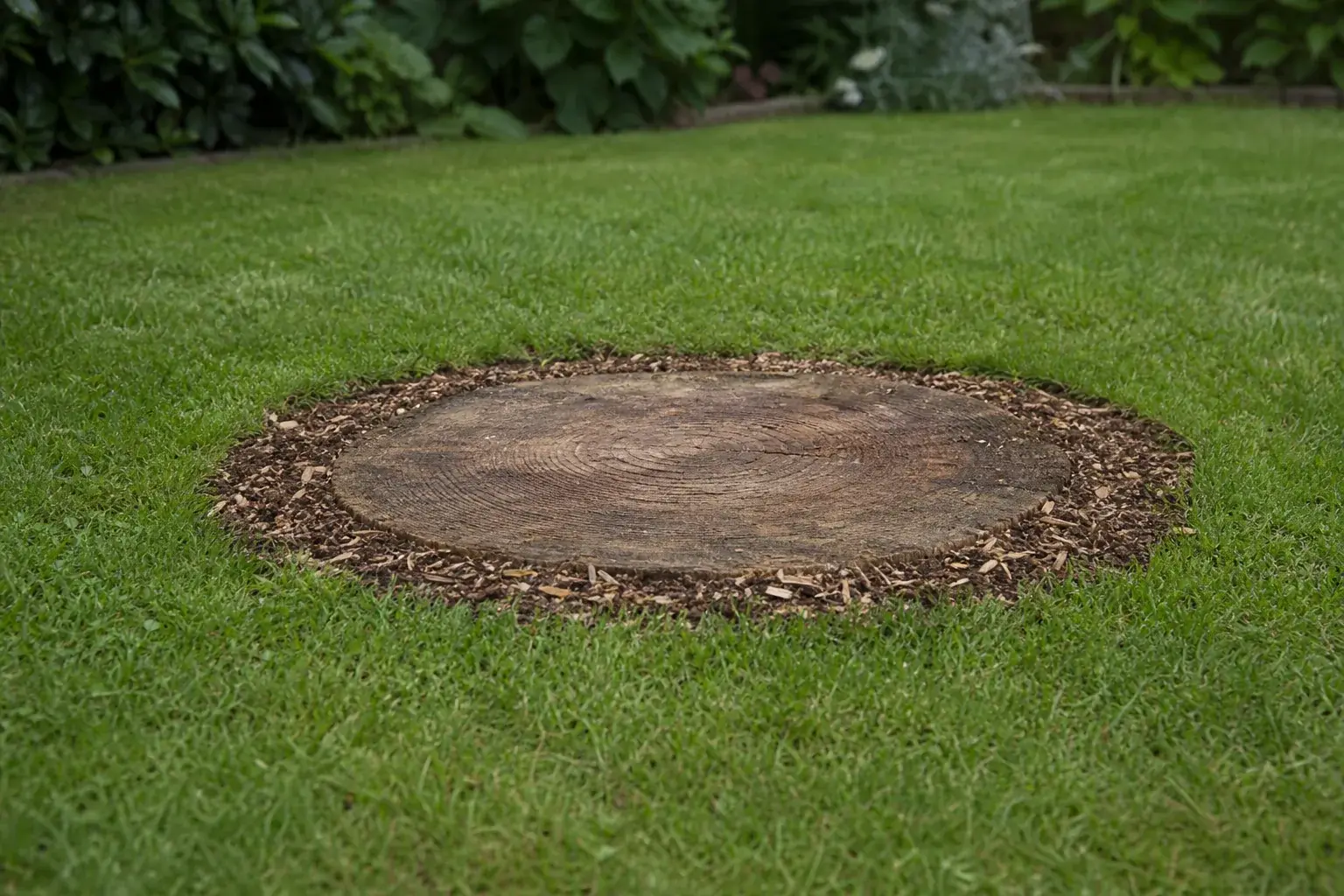
A stump left after felling is awkward to mow around, slow to rot and inconvenient if you want to turf, plant or pave over the spot. Grinding it out turns it into chip and soil in an hour or two.
How a stump grinder works
A stump grinder is a machine with a heavy steel wheel set with tungsten carbide teeth, spinning fast and swept slowly from side to side across the stump. Each pass shaves off a layer of wood rather than cutting through it, so the stump and its larger surface roots are gradually reduced to a pile of coarse chippings in and around the hole.
Grinding depth is a choice rather than a fixed figure. Enough to turf over is one thing, enough to lay a patio or plant a new tree in the same spot is another, and it takes longer. Machines come in different sizes, including narrow ones designed to fit through a standard garden gate, which is usually the deciding factor on a back garden job.
Checking the ground before grinding
The main risk in stump grinding is what lies in the soil rather than the stump. Water pipes, gas services, electricity cables, drainage runs and irrigation lines all turn up near trees, and a grinder makes no distinction between a root and a supply pipe. Service locations are checked and the area probed before the wheel goes in.
Stones are the other issue. A stump in made ground, near an old wall or in a gravelled area can hide hardcore that chews through grinder teeth and sends debris flying. Boards and guards go up to protect windows, cars and fencing, and anything loose nearby is moved out of the way first.
What is left in the hole
Grinding produces a surprising volume of material, because wood chip takes up far more space than the solid stump it came from. The chippings can be raked back into the hole and topped with soil, which is the simplest finish and settles over a few months, or barrowed out and taken away so the hole can be filled with topsoil instead.
If you plan to turf or plant straight away, taking the grindings out is the better option. Fresh woodchip mixed into soil ties up nitrogen as it breaks down, which leaves new grass and young plants looking pale and sulky for a season. Clean topsoil in the hole avoids that entirely.
- Rake the grindings back in and top with soil, for an area that will stay rough or be mulched
- Remove the grindings and backfill with topsoil, for turfing or planting
- Grind deeper than standard, where paving, a base or a new tree is going in
- Grind lateral roots as well, where they lift a lawn or a path nearby
Stumps, suckers and honey fungus
Some species keep going after felling. Cherry, poplar, lime, willow and robinia commonly send up suckers from the stump and the root system, sometimes several metres away, and these can keep appearing for years. Grinding the stump removes the main point of regrowth, though determined species may still need a few suckers pulled before they give up.
A decaying stump is also a food source for honey fungus, an Armillaria root disease that spreads through the soil by black, bootlace like rhizomorphs and can go on to kill nearby shrubs and trees. Removing the stump takes away the fuel. Where honey fungus is suspected, it is worth thinking carefully about what, and whether, to replant in the same ground.
What affects the time and cost
Diameter is only part of it. The spread of surface roots, the hardness of the timber, how high the stump was left, the depth you need and the amount of stone in the ground all change how long the work takes. A low, clean cut stump in open soil is quick, and an old, flared oak stump full of grit is not.
Access decides which machine can be used, and that often matters more than the stump itself. Where the only route is through a house or down a narrow passage, a smaller machine does the job but takes longer. Mentioning the gate width when you enquire saves a wasted visit.
Worth reading first
- Choosing a tree surgeon, and what drives the costWhat separates a competent outfit from a cheap one, what actually moves the price of a removal or a prune, and whether a stump is worth grinding out.
- Signs a tree is unsafe, and when to call an arboristThe things worth looking for on your own trees, from fungal brackets and bark cracks to a lean that has changed, and what warrants a professional opinion.
Questions
Stump Grinding questions
The things people usually want to know before booking this work in.
Discuss your trees or your garden
Tell us what you are dealing with and we will arrange a time to come and look. No obligation either way.
- Office hours
- Monday to Friday, 09:00 to 17:00
Saturday and Sunday, closed - Based in
- Ash, Aldershot
Surrey GU12 6SD