Services
Crown reduction, thinning and lifting
Reducing height and spread, thinning dense canopies for light, lifting low limbs and taking out deadwood.
Most pruning requests come down to three things: the tree is too big, too dark, or too low. Reduction, thinning and lifting each address one of those, and choosing the right one is what keeps a tree looking like a tree afterwards.
Reduction, thinning and lifting are not the same job
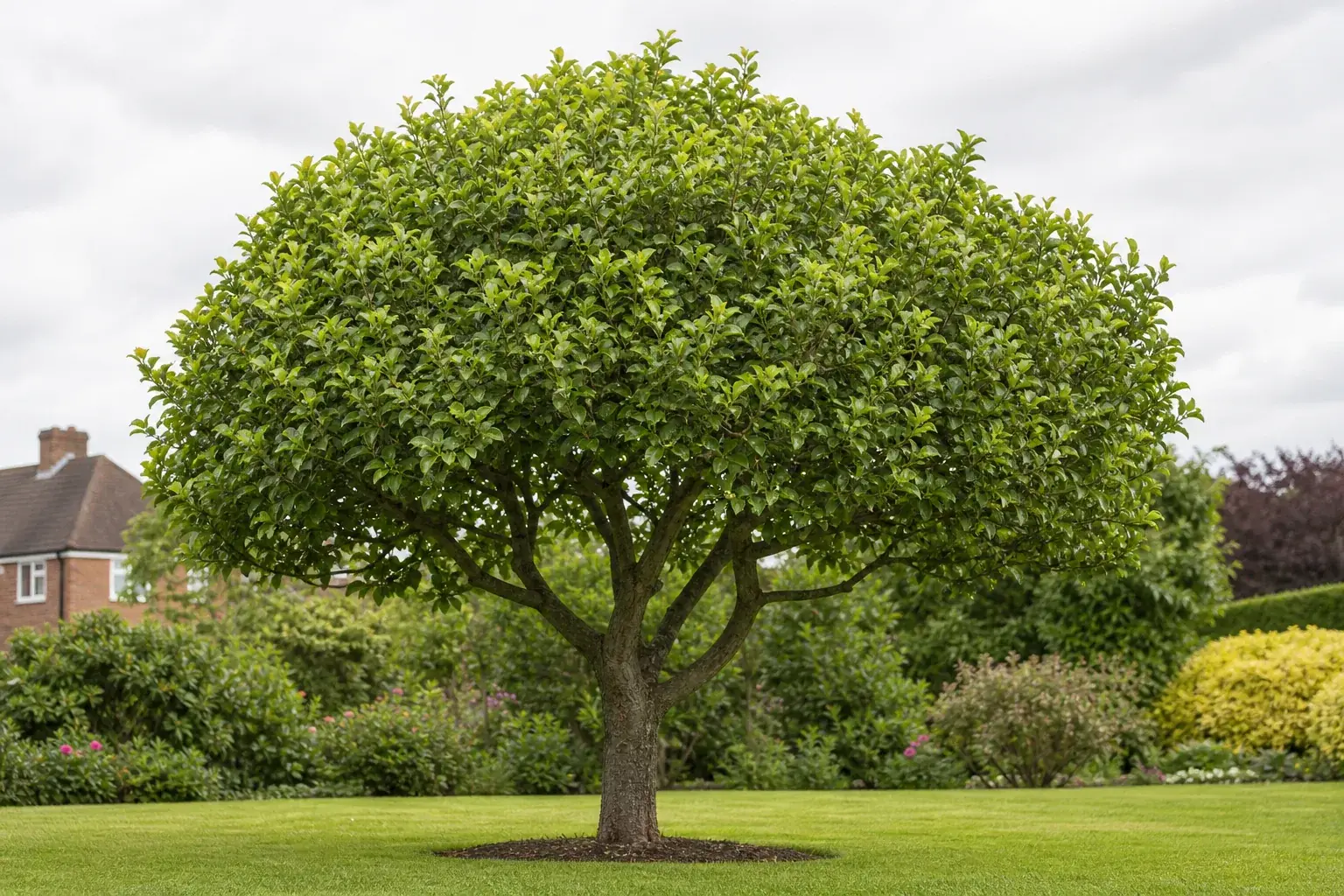
A crown reduction makes the whole canopy smaller, shortening branches back to suitable side growth so the tree keeps its natural outline at a reduced size. It is measured in metres off the height and spread, and a reduction of more than about a fifth to a quarter in one go is a lot to ask of most mature trees.
Crown thinning takes out a proportion of the secondary branchwork evenly throughout the canopy. The tree stays exactly the same size, but more light and wind pass through it. Crown lifting removes the lowest branches to give clearance underneath, specified as a height above ground, which is the usual fix for a tree blocking a path, a drive or a view from a window.
- Reduction, for a tree that has outgrown its position in height or spread
- Thinning, for a dense canopy casting heavy shade on a lawn or window
- Lifting, for low limbs over a path, drive, lawn or neighbouring garden
- Deadwooding, for dead branches in an otherwise healthy crown
- Selective pruning, for a single limb causing a specific problem
Why topping damages a tree
Topping means cutting the main stems back to stubs at an arbitrary height, with no regard for where the growth points are. It is still common, it is cheap, and it causes lasting harm. The large wounds left in the middle of a stem cannot be sealed properly, so decay works down into the heartwood over the following years.
The tree then responds to losing its foliage by throwing out a mass of vigorous shoots from dormant buds just below the cuts. Those shoots grow quickly, attach only to the outer layers of a decaying stub, and within a decade you have a taller, denser and considerably less stable tree than before. A proper reduction cuts back to a lateral branch large enough to take over, which keeps both the shape and the structure intact.
Getting light back into a garden
Shade is the most common reason people call, and the instinct is usually to ask for height off. Often that is not what fixes it. If low afternoon sun is being blocked, taking the top off a tree makes almost no difference, while lifting the crown by three or four metres transforms the light on a patio.
Thinning helps where the canopy is a solid block of foliage, as it tends to be on sycamore, horse chestnut or an untouched lime. Removing a share of the inner branchwork lets dappled light through to the grass beneath without changing the tree’s size or outline. Walking the garden at the time of day that bothers you most is the quickest way to work out which approach is needed.
Timing and species
Most broadleaf trees are best pruned in the dormant season, roughly late autumn to late winter, when the structure is visible and the tree is not carrying a full load of leaves. There are well known exceptions. Birch, maple and walnut bleed sap heavily if cut in late winter or early spring, so they are better pruned in late summer. Plums, cherries and other Prunus species are pruned in summer to reduce the risk of silver leaf.
Nesting season places a firm limit on anything from March to August. Under the Wildlife and Countryside Act 1981 an active nest must not be disturbed, so the canopy is checked before work starts and the job moves if a nest is found. Light deadwooding can often continue, but a full reduction usually waits.
Protected trees and planning
Reduction and thinning count as work to a tree, so a Tree Preservation Order applies to them exactly as it would to felling. Consent is needed from the local authority, and the application has to set out what is being removed, usually in the terms used in the British Standard for tree work: reduce by so many metres, thin by a given percentage, lift to a stated height.
In a conservation area the six week notice period applies in the same way. Councils generally take a reasonable view of a well specified reduction on a tree that genuinely needs it, and a poor view of a request to top a healthy specimen. Specifying the work properly makes approval far more likely.
Worth reading first
- When to prune a tree, and why timing mattersWhy most broadleaf pruning happens in winter, which species are exceptions, how apple and other fruit trees differ, and the legal limits during nesting season.
- Tree Preservation Orders and conservation areasWhat a TPO means for work on your own tree, what is different in a conservation area, and the notice the council expects before anything is cut.
- Choosing a tree surgeon, and what drives the costWhat separates a competent outfit from a cheap one, what actually moves the price of a removal or a prune, and whether a stump is worth grinding out.
Questions
Crown Reduction & Thinning questions
The things people usually want to know before booking this work in.
Discuss your trees or your garden
Tell us what you are dealing with and we will arrange a time to come and look. No obligation either way.
- Office hours
- Monday to Friday, 09:00 to 17:00
Saturday and Sunday, closed - Based in
- Ash, Aldershot
Surrey GU12 6SD